
I was thinking what to write for my Christmas post and wondered about the things less said. Have you ever wondered about the time between Mary and Joseph arriving at the inn or stable, on the (supposed) donkey and the appearance of the shepherds? This is the actual moment of Jesus’ birth. It always raises a smile, particularly from the mums in the audience, when the little girl playing Mary, in the school nativity play, in a dress made from an old blue sheet, has a doll placed in her arms and told to look at it and smile.
The young Mary would have expected the women in her family, and the local Nazareth midwife, to be present to help her through the difficulties of her first birth. But because of the whim of the Roman authorities, she had to leave her home and, along with her new husband, travel to Bethlehem, a long journey of about 80 miles.
What did Joseph do at the moment when his wife went into labour and needed help? Were there female members of his family around, or did he shout for help, and someone run for the midwife? Many women and babies died in childbirth, and they were not expected to give birth alone. There would have been a local woman to help her at this dangerous time.
It was a common idea from the early Middle Ages to think of Mary as the perpetual virgin. Not only in her relations with her husband but also that she remained “intact” and “unbroken” even during childbirth. That somehow Jesus was miraculously born without the messiness of a natural childbirth, leaving Mary unbroken. (1) To me, the miracle of the incarnation is despite of, and even perhaps because of, the messiness of the world Jesus was born into.
The Bible uses metaphors to describe God. Many of these are masculine such as king, lord, shepherd and warrior. Alongside these are some feminine attributes, namely mother, wet nurse and midwife. It is the image of God, the midwife, that I want to concentrate on.
“Yet you brought me safely from my mother’s womb and led me to trust you at my mother’s breast. I was thrust into your arms at my birth. You have been my God from the moment I was born.” Psalm 22:9 -10 NLT
In an age without modern medical intervention, childbirth was one of the most dangerous things a woman could do. Here, God is presented as a midwife, catching the baby at the moment of birth and placing it on the mother’s breast. This is an image of deliverance as much as a metaphor for God, the warrior.
Job 38:8-9 “Who shut up the sea behind doors when it burst forth from the womb, when I made the clouds its garment and wrapped it in thick darkness.” NIV
God is described in a tender and poetic image of catching the sea as it is born and wrapping it in clouds as a midwife would wrap a newborn in swaddling cloths. He is involved in cosmic events, waiting for the time when the earth was ready to be born. Swaddling the sea and preventing danger in a situation as messy and unpredictable as childbirth. (2)
Another image of God the midwife can be found in Romans 8:22 and 26. God is the midwife for the whole of creation, as it experiences the pains of labour and childbirth. In this image, we are both the mother groaning in childbirth and the baby waiting to be delivered.
“For we know that all creation has been groaning as in the pains of childbirth right up to the present time… And the Holy Spirit helps us in our weakness. For example, we don’t know what God wants us to pray for. But the Holy Spirit prays for us with groanings that cannot be expressed in words.” NLT
The Holy Spirit is groaning alongside us and, like a midwife, leading us through the difficult stages of pain and despair until the baby is born. As Mary looked tenderly down upon her baby, the memory of the pain of the previous hours must have faded into joy.
What is God, the midwife, intending to birth in your life this coming year? Has the past year been one of groaning and pain as you wait? I’m sure many of us are in this season of the pain of childbirth, and I pray that what you birth will be what God wants to bring into your life.
Using any metaphor to describe God only gives us a glimpse of his character. That is why we need a variety of metaphors to come anywhere close. We need these feminine metaphors to stand alongside the more common male ones, to give us a more complete image of God, our father, king and midwife.
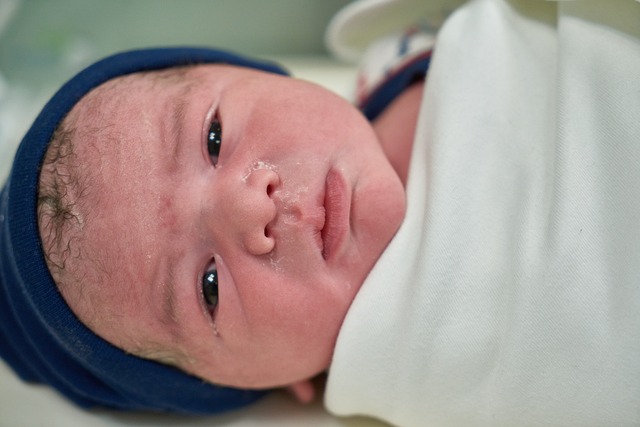
Image by Engin Akyurt from Pixabay
To me, the miracle of the incarnation is despite of, and even perhaps because of, the messiness of the world Jesus was born into.

Image by Jeff Jacobs from Pixabay
Mother, wet nurse and midwife, are three feminine metaphors to describe God.

Photo by Janko Ferlic on Unspash
What is God, the midwife, intending to birth in your life in the coming year?

Susan Sutherland is the author of the Leaving Bethany Trilogy. To buy Leaving Bethany, Return to Caesarea and Advance from Antioch please go to the buy page.
If you like Susan’s blogs sign up for the mailing list and receive a free copy of The Aemilia Metella Interviews.
(1) Radio 4, Start the Week, Sex and Christianity, available at https://www.bbc.co.uk/sounds/play/m0024w7d
(2) Scott Robinson, A, (2019), Image of the Invisible, Daily Bible readings from Advent to Epiphany, BRF
 Leaving Bethany
Thank you for this beautiful, tender and thought-provoking reflection, Sue. Very inspiring and helpful.
Wishing you a blessed Christmas season,
Cath x
LikeLike
Now there is some food for thought! Thank you, Sue.
LikeLike