
The Woman Seen by Jesus
The small child ran into her grandmother’s arms and hid her head in her dress.
“Don’t be shy, Miriam,” her grandmother said. “Aemilia has travelled a long way to speak to me and meet your abba.”
“Abba! Abba!” the young girl shouted, looking around for her father.
“My son dotes on his children, and they are such a blessing, aren’t they? Especially when I remember how I felt when he was taken away from me. That’s what you’ve come to talk to me about, isn’t it? Let me take Miriam to her mother, and then we can talk without being disturbed by this little bundle of energy.”
She picked up the small child, who snuggled into her shoulder, still shouting for her abba. I followed Leah out into the courtyard, where a chicken came over to peck at my toes, and I shooed it away with my foot. It trotted off towards the well-tended vegetable patch in the corner. The village of Nain is poorer than its neighbouring town, Capernaum, but the potter’s house is one of the nicest homes. Not that it is any larger, but with vines growing over the sides of the courtyard, it had a homely, welcoming feel.
“Aemilia!” Leah shouted. “Let’s sit in the courtyard; it’s less stuffy.”
She placed a glazed wine jug and two matching cups on the table outside.
“These are beautiful, Leah. Are they your son’s work?”
“Oh yes, he’s a very good potter, just like his father before him. People travel from Capernaum to buy his wares, and they are even sold in the markets in Jerusalem.”
Leah poured the wine into the two cups. “You want to know about the day I met Jesus, don’t you?”
“Yes, please, Leah. First, can you tell me about your life before that day?”
“What can I tell you except that life was hard?” She shook her head and took a sip of wine. “My husband was a good man, a potter and well-respected in Nain and in the Capernaum markets as a fair trader. Our only sadness was the lack of children. You see, I could never seem to carry one to birth.”
Leah looked away and sipped her wine. Letting the cup rest between her hands. I waited for her to continue. “Even after all these years, it is still hard to talk about it.”
I reached over to touch her arm. “Then God answered your prayers.”
The light returned to her eyes. “What a blessing from God. Our only child, a son, was born healthy and whole, and the entire village rejoiced with us. Such an intelligent and quick child, he was making little pots by the age of six and started working with his father.”
“How old was Joel when his father died?”
“He was only ten years old, poor child. He missed his father dreadfully, but he took on the pottery workshop like an adult. Every month, he would take what he had made to market and come home with vegetables and provisions he had bought for us. Out of respect for his father, the other potters helped him; that is, all except one.”
Intrigued, I asked who that was. She pulled a face and continued her story. “That was Silas, the potter from the next village. An envious, selfish man, whom my husband avoided as much as he could. He tried to bully me and Joel into giving him the pottery workshop, but we refused. He thought that because Joel was not yet thirteen, he could do as he wished. But we stopped him.”
“Joel worked so hard that one day he collapsed over his potter’s wheel. I ran to him and helped him into the house, where he sank onto the bed. He always worked so hard that I thought a good night’s sleep would do him good. But that was not the case; he never regained consciousness and died two days later. Oh, Aemilia, the sadness was terrible. Losing the only person I had in the world took away my joy and light. All was dark, and I was alone.”
I remained silent and let Leah tell her story.
“The following morning, before I placed Joel’s body on the funeral bier, Silas appeared with a piece of paper with writing on it. He said that it was a contract giving him ownership of the workshop, all the contents, and even the house. He said that Joel had signed an agreement for a loan, and now, after his death, all was forfeit to him. He told me that, generously, he gave me a week to vacate the house.”
I shook my head in disbelief that someone would do that to a grieving mother. “Was all that written into the contract?” I asked.
“How should I know? I can’t read, nor could Joel then. I was stuck like a fly in honey and thought that I could do nothing about it. Someone told him to leave me alone until after the funeral, and he said that he would return the following morning to collect what was rightfully his. I followed behind as Joel’s little body, wrapped in the sheet, was placed on the funeral bier, and nearly the whole village followed the procession. We got as far as the gate, and I could go no further and collapsed to the ground. All strength left my body, and I could no longer walk. Some people tried to pull me up, but I could not go on.
“Then a touch on my shoulder that felt different. There was strength and compassion in that gentle hand. A man bent down to look at me, and I saw myself reflected in his eyes, which welled up in sympathy for mine. `Don’t cry,´ he whispered into my ear. At that, I was angry. How dare a stranger tell me not to cry? I had lost everything, and now even my home was gone. I had a right to cry, and he could not stop me, whoever he was.
“Lots of people were following this man, and there was a crush at the gate, stopping the bier from leaving. He reached out his hand and touched Joel’s lifeless body. Most people would not touch a dead person, but he didn’t seem to mind. Everyone was silent, waiting to see what would happen.
“` Young man´ he said in a loud voice. `I am telling you to sit up and live!´ If I had not still been on the floor, what happened next would have knocked me over. Joel sat up on the bier, and the sheet fell away. He took a deep breath and gasped before looking around. Jesus returned and, holding my hand, he took me to him.”
Leah wiped the tears from her chin and breathed out. “Oh, Aemilia, imagine that moment, just imagine what I was feeling. I touched my son’s cheek to make sure that he really was alive, and it was… warm, and not the grey cold of death. Two of Jesus’ friends helped to lift Joel off the bier. `Look after him, dear woman,´ Jesus said. `Take your son home and give him a good meal.´
“What was the reaction of the crowd to seeing a dead boy raised to life?”
Leah was now laughing. “It was chaos. Everyone crowded around us, shouting and cheering, but all I wanted was to take Joel home. Some were strangers and followers of Jesus, who were excited to see another miracle, and others were the villagers who wanted to know more. It went quiet as Jesus started to speak, and we slipped away.”
“What was the effect of Joel’s healing?”
“Well, Aemilia, our whole family and a lot of the village became followers of Jesus that day, and we still are. How could we not be? My son was not the only one Jesus raised from the dead, and since then, he has become a friend of Lazarus of Bethany. They have a lot in common. Also, Jesus himself came back to life three days after his death at the hands of the Romans. Such a saviour!”
“Thank you very much for speaking with me today, and one final question. Apart from giving you back your son, what difference has meeting Jesus made in your life?”
Leah sat looking at the breeze fluttering the vine leaves, and then turned to me and said. “Since that day, we’ve heard so much more about Jesus, and he once said these words. `You are blessed when you feel you’ve lost what is most dear to you. Only then can you be embraced by the One most dear to you.´ And that’s what he has done for me. He embraced me when I needed him most.”
The story of the raising of the Widow of Nain’s son is told in Luke’s Gospel, chapter 7. Tradition names the widow Leah or Lia, though the gospel does not name her. Her son also remains unnamed, but here I have given him the name Joel. His occupation as a potter is entirely my own invention. The quote from Jesus is from Matthew 5:4 from The Message Version.

Photo by Pranav Kumar Jain on Unsplash

Image by Pixels from Pixabay
“What a blessing from God. Our son was born healthy and whole.”
“I saw myself reflected in his eyes, which welled up in sympathy for mine.”
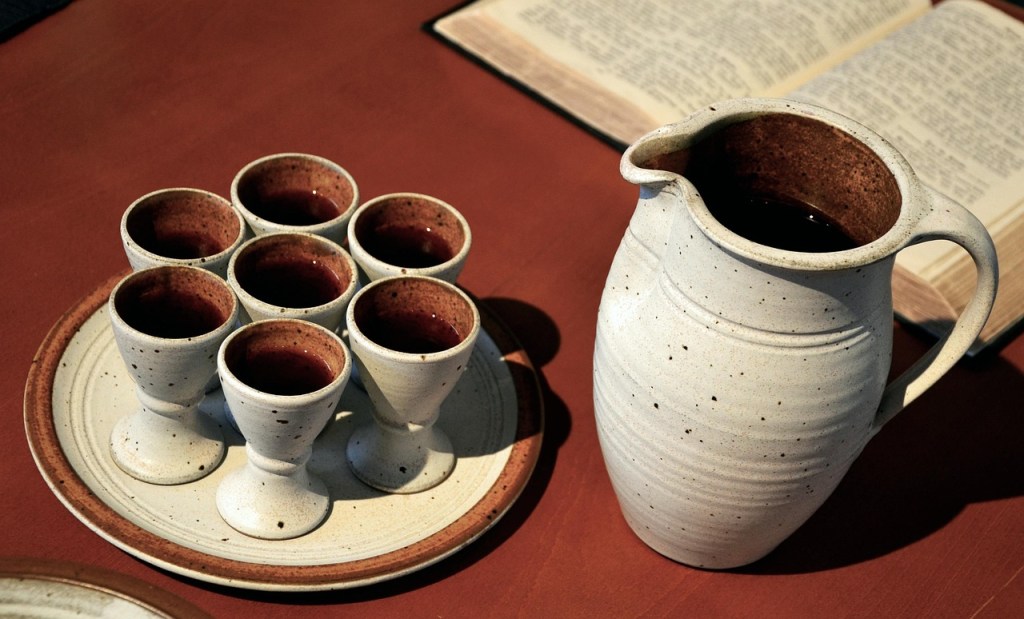
Image by Congerdesign from Pixabay
“Young man” he said in a loud voice. “I am telling you to sit up and live!”
“You are blessed when you feel you’ve lost what is most dear to you. Only then can you be embraced by the One most dear to you.” Matthew 5:4 The Message version

Naples National Archaeological Museum, CC BY-SA 2.0 <https://creativecommons.org/licenses/by-sa/2.0>, via Wikimedia Commons
If you have enjoyed reading this Aemilia Metella Interviews, why not check out my other blogs? To receive a free ebook of a collection of her stories, join my mailing list.

Susan Sutherland is the author of the Leaving Bethany Trilogy. To buy Leaving Bethany, Return to Caesarea and Advance from Antioch please go to the buy page.
If you like Susan’s blogs sign up for the mailing list and receive a free copy of The Aemilia Metella Interviews.


what a story!! I was struck by how Jesus told the young man to get up and live. He didn’t ask God to make him live again, but spoke himself with authority.
He tells us to do the same. We are to tell the mountain to move, not ask God to move it.
Wonderful story. Thank you Sue.
LikeLike
Thank you Dawn. This widow’s story is one I have had on my mind for a while, since someone suggested it. I’m pleased that you liked it and got something out of it.
LikeLike