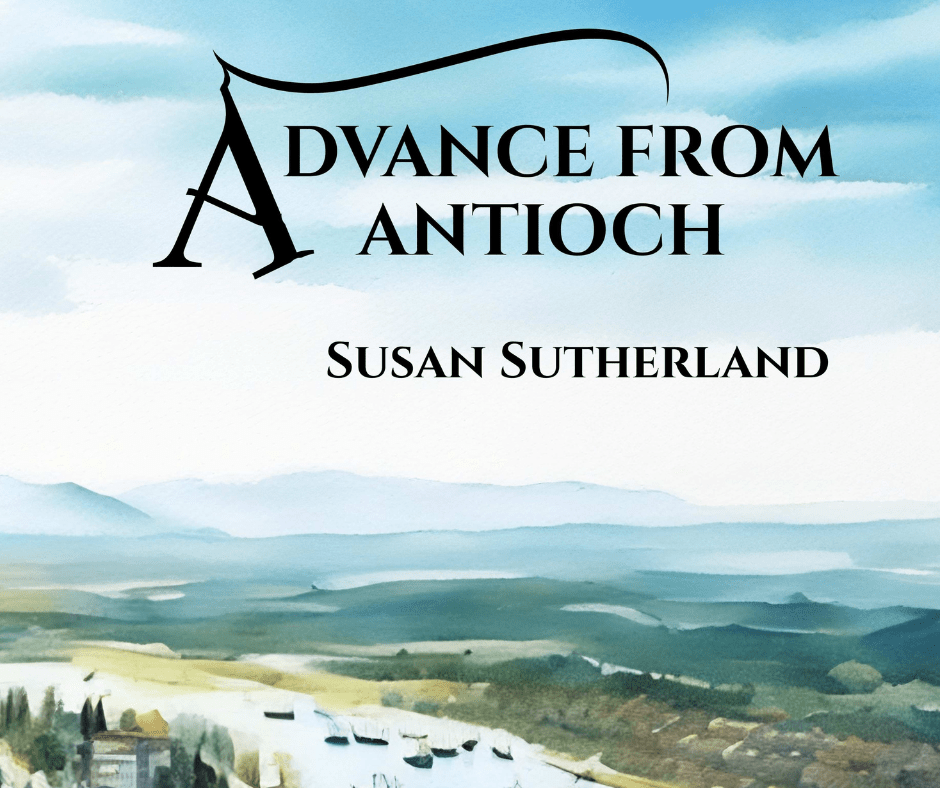
In the past two posts, I have looked into the Biblical and historical background of my novels. In January I looked at Leaving Bethany and last month, Return to Caesarea. Now it is the turn of the final book in the Leaving Bethany Trilogy, Advance from Antioch.
The story picks up one year after Return to Caesarea, and Martha has moved to Antioch to help lead the fledgling church in the city. But things are not going well with Martha. She made a bad choice at the end of Return to Caesarea and was willing to do something she now regrets. Wracked with guilt and shame over her decision, she must find forgiveness before she can move on. Her guilt leads her to make a quick decision which will have consequences for her future and happiness.
Date
Advance from Antioch is set in AD 40. Dating of events in the New Testament is problematic and fraught with difficulty, and different experts suggest different dates. Luke, who wrote Acts of the Apostles, gives us the accounts in more or less chronological order, but often without reference to other historical events taking place. Hence, there is difficulty in dating with some level of accuracy. Paul gives us further clues in his letters when things may have happened.
The date of Barnabas being sent to Antioch, and his going to Tarsus to find Saul, happened sometime between AD 40-45. I have set the book in AD 40, on the early end of these dates, because it suited my story to be set during the events of that year.
Biblical Background
Chapter 11 verses 19-26, of the Acts of the Apostles, tells us that after Stephen’s death, or Stefanos as I called him in Leaving Bethany, many in the church in Jerusalem were scattered. According to church tradition, this included Martha, Mary and Lazarus, as described in Leaving Bethany. Some settled in Antioch in Syria, and began to speak about Jesus, not only to the Jews but to the Gentiles or non-Jews, and a large number believed. There had been Gentile believers, such as Cornelius and the Ethiopian eunuch before, but in Antioch, Gentile pagans came in greater numbers.
News of this reached the ears of the apostles in Jerusalem, and they sent Barnabas to find out what was happening. The Bible describes Barnabas as “a good man, full of the Holy Spirit and strong in faith.” A glowing reference and a man up to the job. After arriving and seeing the situation, he went to fetch Saul from Tarsus and brought him to Antioch. Why would he fetch Saul? Saul had been in Tarsus, in southern Turkey, since about AD 36. What was he doing there, besides making tents for a living? It is thought he was busy working out how the good news of Jesus was not only good news for the Jews but also the Gentiles, and Barnabas knew this.
This is where our story starts. Barnabas, Saul, and in my story, Miriam (Mary) Magdalene set out to investigate the numbers of pagans becoming Christian believers and to find out what is attracting them. Though this is welcomed, it causes huge problems, and the Jewish believers are faced with important questions, such as who they can associate with or eat with.
Historical Background
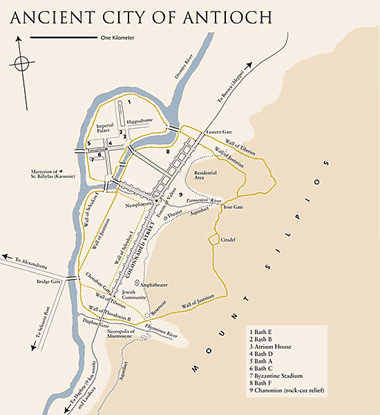
Antioch was a large cosmopolitan city, described as the third largest in the empire, behind Rome and Alexandria. Today the modern town of Antakya is in Turkey, near the Syrian border and sits upon the old Roman city of Antioch. In February 2023, the entire region suffered extensive damage because of a powerful earthquake.
In the winter of AD 39/40, the Greek population of Jamnia, in Judah, erected an altar dedicated to the imperial cult, which was the worship of the emperor as a god. This angered the Jewish population, who tore it down and rioted. Emperor Caligula took this as a personal insult and ordered the governor of Syria, Publius Petronius, to send half his troops, that is, two legions, to Jerusalem. There they were to erect a statue of himself as the god Jupiter in the Temple.
To place a statue in the Temple of anyone, let alone a Roman Emperor who desired to be worshipped as a god, was sacrilegious to all Jews and Christians. This caused riots in Jerusalem and Tiberias. Publius Petronius was the governor of Syria between AD 39 and 42. The historical records show he was a shrewd and intelligent man, who made a careful study of the Jewish religion and practices. Petronius, knowing that this would cause huge riots and trouble in Judea and Jerusalem and result in loss of life, ordered the statue to be made. To find out what he did next and how he dealt wisely with the situation, and the consequences of his actions, you will have to read Advance from Antioch!
Conclusion
As with any good story, there must be conflict, and there is plenty of that in Advance from Antioch. Caligula’s plan to erect the statue of himself in the Temple threatens their faith, sparking opposition in Antioch and intensifying persecution. But the real danger is found closer to home and more personal for Martha and her friends.
The report that Barnabas, Saul, and Miriam take back to the apostles in Jerusalem is a first step in what will be a major shift for the young church. From these small beginnings, the message spread to Rome and out to all the world.
The church was on the advance and nothing has stopped it since.
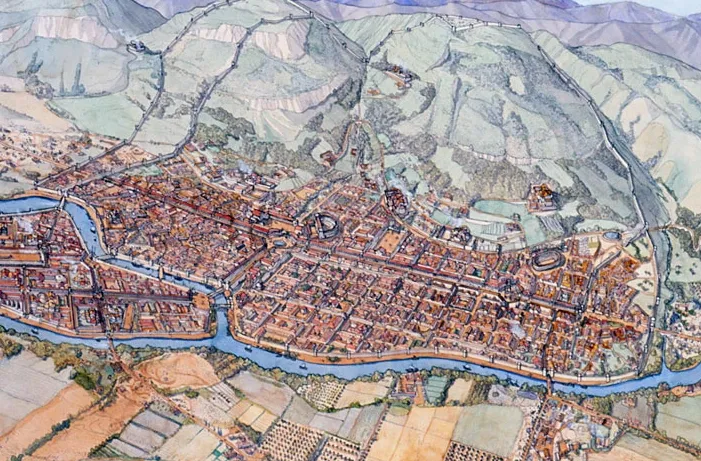
Antioch, Jean Golvin, via jeanclaudegolvin.com
Wracked with guilt and shame over her decision, she must find forgiveness before she can move on.
Caligula’s plan to erect the statue of himself in the Temple threatens their faith, sparking opposition in Antioch and intensifying persecution.
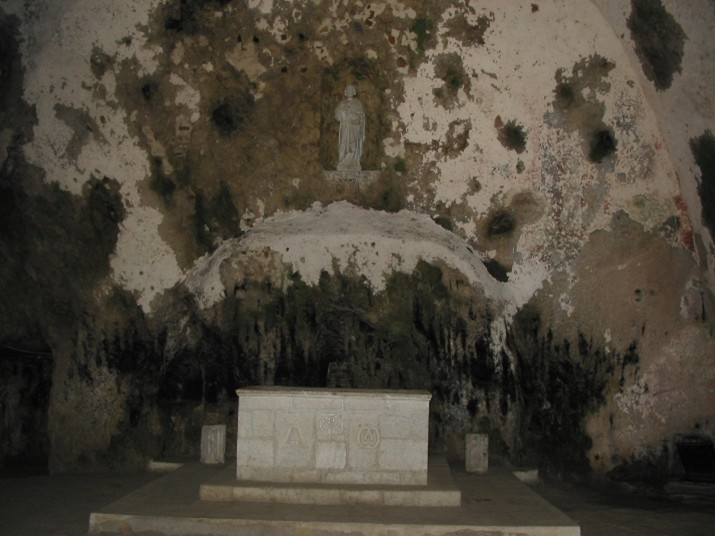
The cave church of St Peter and St Paul, Antakya

From these small beginnings, the message spread to Rome and out to all the world.
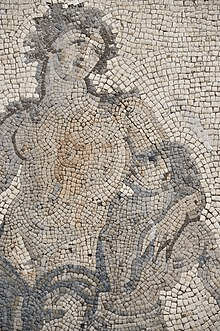
Dionysus mosaic in Hatay Archaeology Museum
The church was on the advance and nothing has stopped it since.

Susan Sutherland is the author of the Leaving Bethany Trilogy. To buy Leaving Bethany, Return to Caesarea and Advance from Antioch please go to the buy page.
If you like Susan’s blogs sign up for the mailing list and receive a free copy of The Aemilia Metella Interviews.
 Leaving Bethany
Three fabulous Biblical historical Fiction books with great characters and story-lines.
LikeLike