
Changing the narrative for Martha and Mary
This is the first of a two-part post based on a seminar and academic paper I gave at the International Christian Dance Fellowship conference in Christchurch, New Zealand, in April 2025. The questions I posed were:
- What story do we want to tell?
- Can we tell a different story?
- Can we tell the same story but from another perspective?
Changing perspectives may take some digging to find a different story, and telling a new narrative may prove controversial if other people’s, or our own, long-held opinions are challenged.
When we look at a map of the world, we are accustomed to seeing a certain projection, usually the Mercator projection. But what if we view a map from a different perspective? This can be initially unsettling as you try to locate the main landmasses. Which of the two maps is closer to the truth? Both are, but they are from different perspectives.
Polarisation
Some people are very polarised and have entrenched opinions. Often thinking they are 100% right, and if you disagree, you are 100% wrong. This appears to have worsened over the past few years, exacerbated by the rise of social media and confrontational politics. And I speak from personal experience.
A friend once told me, “You’re entitled to your opinion, but you’re wrong.” She said the Holy Spirit spoke to her, so she was right. If I disagreed, then I was wrong. She was unaware of the danger in this attitude and unable to see the matter from another perspective.
It did not matter what the issue was or who was right. If we think everyone has to change to come in line with us and our way of thinking, then we need humility. This is not a question of being right or wrong.
How I have learned to change the narrative
Ten years ago, I began writing my three novels within the genre of Biblical fiction, and it marked a complete change of direction for me. Transitioning from working in education to becoming an author was a surprise. I was reading about Martha of Bethany and the three stories told about her in the Bible, and I thought it would make an interesting novel. My original plan was to write three short stories, but these evolved into three full-length novels that depict the first seven years of the early church. It took me nine years to write them all. So, be careful what you start. You never know where it will end.
Reframing the narrative with Martha and Mary
When someone discovered I was writing in the first person from Martha’s point of view, he suggested changing to write from Lazarus’ point of view because he is more interesting. Why would Martha be less interesting than her brother? Yes, Jesus raised him from the dead, but it was Martha who wrote to Jesus to tell him that Lazarus was ill, and she is the most proactive of the three siblings.
Having grown up in the church, I have heard many sermons and Bible stories about Martha and her siblings, Mary and Lazarus. It was not long before I realised I was going to write from a different perspective than the one often told about the anxious and worried Martha, who made the wrong choice. Let me demonstrate this by showing two paintings.
The first is Martha and Mary with Jesus, by Henryk Siemiradzki, a 19th-century Polish artist. Let me ask you a few questions about the painting.
- Who is in the painting?
- Where is Martha? Why is she on the outside looking in?
- What does this say about Martha and her relationship with Jesus?
- Who is the most important person here, apart from Jesus?
Now, look at the body postures of Martha and Mary.
Martha – It is hard to see Martha’s face, but she looks tense. She is carrying a watch jug, and her left hand is placed on her right shoulder in a closed defensive position. She is looking over at Jesus and Mary.
Mary – Sits at the feet of Jesus, listening to him. She is relaxed and looks up adoringly at him. She is quiet, contemplative, unobtrusive and, above all, silent.
Has anyone ever asked you, “Are you a Martha or a Mary?” If so, then you are probably a woman, because I have never heard a man being asked that question. It is a polarising question which supposes that women can be put into one of two camps.
We are often told that Martha was busy in the kitchen providing food for Jesus and his male disciples. She is fussy, anxious and worried about many things. When Martha confronts Jesus about the situation, we are told that he tells her off for being anxious and praises Mary for her better choice.
This misreading of the passage in Luke can lead to an unhelpful division between doing and being, the active and the contemplative, in our Christian life, particularly for women. Are you someone who is always in the kitchen at church events, providing food and washing up? Then you are a Martha. Or are you someone who always attends prayer meetings, makes notes during a sermon and writes a journal of answered prayers and helpful texts? Then you are a Mary. We are all a mixture of the active and contemplative. Why does it have to be one or the other?
Let us change our perspective with a different picture by Jan Vermeer van Delft, 1654, Christ in the House of Martha and Mary. Jan Vermeer shows us a different perspective than Henryk Siemiradzki. What can you tell about the relationship between Martha, Mary and Jesus in this painting?
Martha is the central figure and is painted in a higher position than Jesus. He shows us that Jesus and Martha are interactive, and in his painting, Martha is as important as Mary. It was from this perspective that I wrote my novels.
My next post will continue with the story of Martha. We will also look at how we can change the narrative of other Bible women to reflect more of what the Bible says rather than what we have always been told that it says.
Read Reframe the Narrative part 2
Changing the narrative for Martha and other women of the Bible

Map of the world with New Zealand at the centre
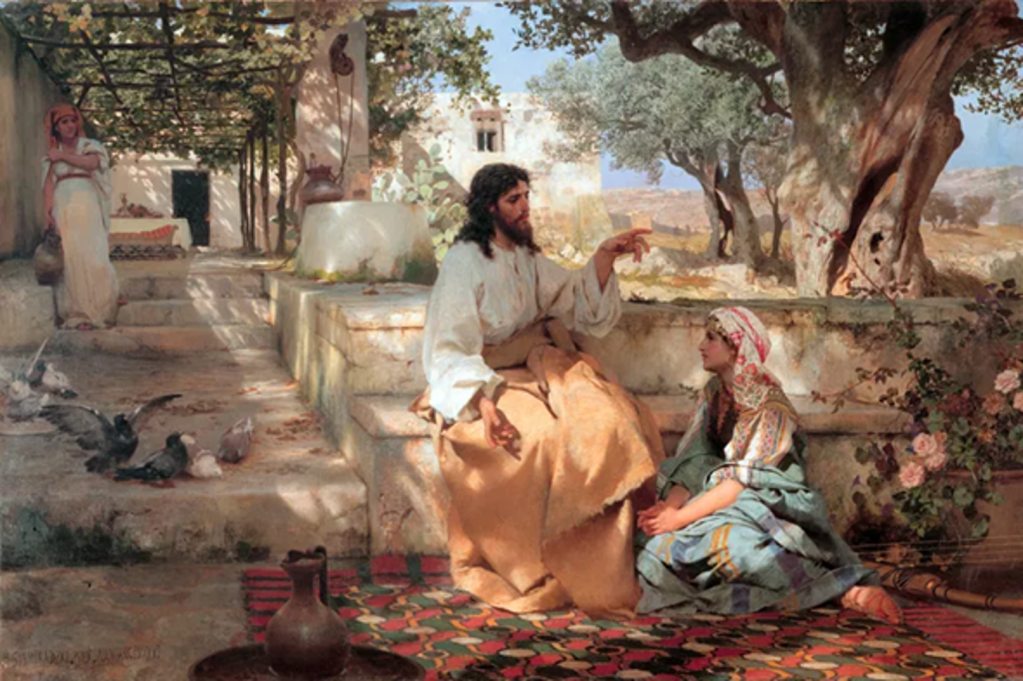
Martha and Mary with Jesus by Henryk Siemiradzki
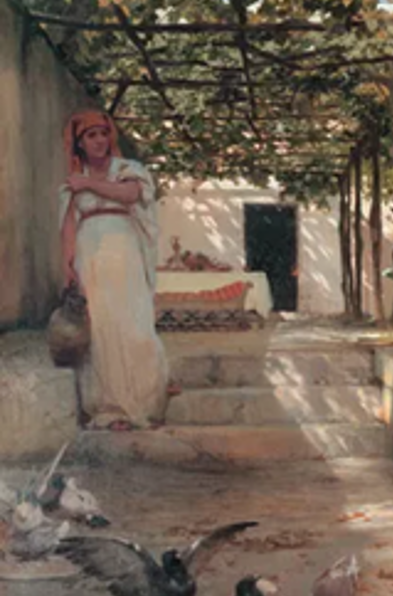
Martha from Henryk Siemiradzki
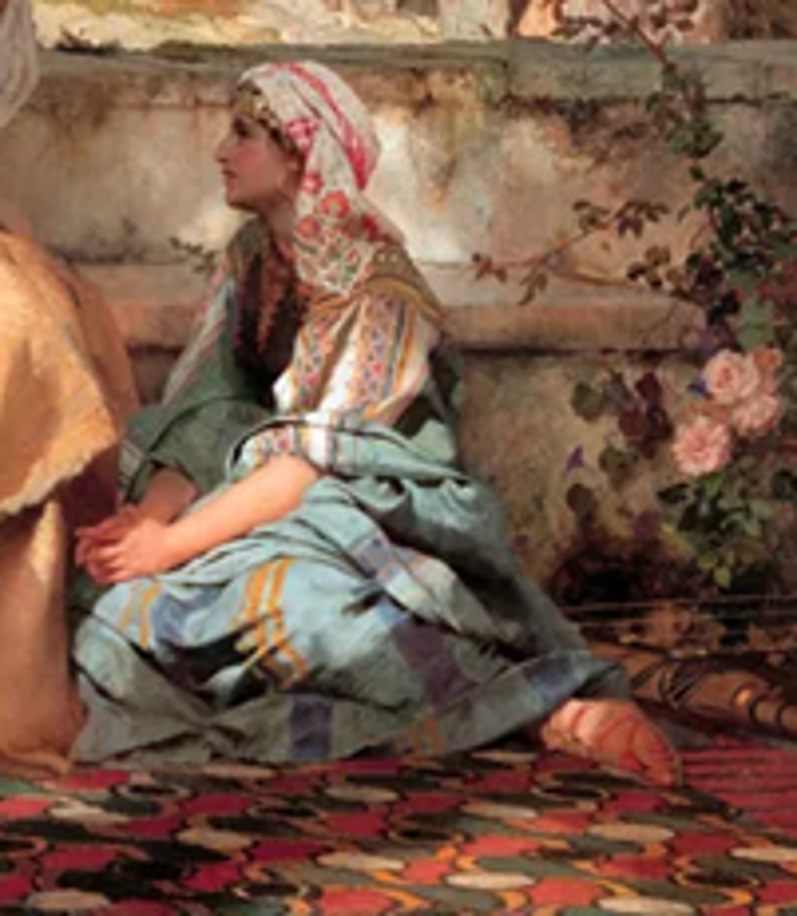
Mary from Henryk Siemiradzki
”Martha, Martha. You are worried and upset about many things, but few things are needed – or indeed only one. Mary has chosen what is better, and it will not be taken away from her.” Luke 10:41
We are all a mixture of the active and contemplative.
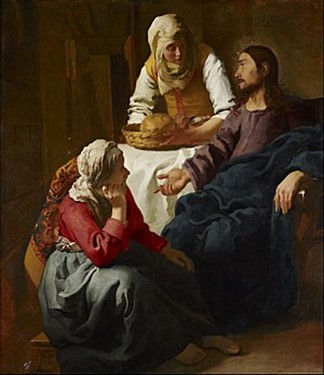
Christ in the House of Martha and Mary Jan Vermeer van Delft 1654
To reflect more of what the Bible says rather than what we have always been told that it says.

Susan Sutherland is the author of the Leaving Bethany Trilogy. To buy Leaving Bethany, Return to Caesarea and Advance from Antioch please go to the buy page.
If you like Susan’s blogs sign up for the mailing list and receive a free copy of The Aemilia Metella Interviews.
 Leaving Bethany
Very important points you make here! Thank you.
LikeLike