
Do you know how you got your name? There’s not much we can do about our family name or surname unless we want to change it completely, but we can thank, or blame, our parents for our first names. My mother wanted to call me Pamela, but I was named Susan after a neighbour’s doll that my brother liked. The name rather dates me, as there have always been many Sues of my age, and not many younger ones. Rather than bemoaning this, I have recently started calling us a “Symphony of Sues” Changing the narrative on the number of Sues helped me to think about all these unnamed women we find in the Bible.
This is the second of a three-part blog series on the unnamed women of the New Testament. Last month, I looked at the widow of Nain and the woman who had been bent double for 18 years. These were two unseen and seemingly insignificant women, but Jesus saw and met with them in their time of need. This time, I will look at two more women whose names we do not know.
The Poor Widow’s Offering
Mark 12:41-44 and Luke 21:1-4 contain the story of this poor widow. This story has long bothered me, as it’s often told that this poor woman was generous and gave of everything she had, so we too must be generous to the point of sacrifice, and then God will bless us. But what did she eat when she got home? Did she go hungry, or did someone give her food and put a roof over her head? Sermons tell us that we should do likewise and be generous even when it hurts. Though this is undoubtedly true, does God want us to give up everything until our purses and bank accounts are empty?
I attended a talk by Kate Bruce and Liz Shercliff, and I want to thank them for an alternative interpretation of this story. (1) When trying to understand a passage, it is important to consider where it sits within the gospel. Immediately before this passage in Mark’s gospel, Jesus is teaching in the Temple and faces confrontation from the Sadducees and Pharisees, who try to trap him. He calls out their hypocrisy, saying that they devour widows’ houses. What did he mean by that?
A widow could not manage their late husband’s estate, and if she had no other male relative, she had to rely on trustees, who were not always as trustworthy as the widow would have hoped. These trustees often gave an outward show of religiosity, but were in fact stealing from her. Jesus calls this out as an abuse of power.
Jesus would have been in the court of women, where there were thirteen chests placed for monetary offerings. Trumpet-shaped funnels sat atop these chests and rang when people put coins in them. The large donations of the rich would trumpet their gifts, but the widow’s two small coins were so insignificant they hardly made a sound.
Why did Jesus point her out? Was it an example of generosity or to point out a victim whose house had been devoured? My author’s imagination wants to fill in what happened next, and I would like to think that someone noticed her and returned her money, or that Jesus sent someone after her.
The Samaritan Woman at the Well
The woman who met with Jesus at the well in Samaria is found in John chapter 4, and is one of my favourites. I have written about her before; see my blog Taking a Fresh Look at the Bad Girls of the Bible. And you can read the interview with her by to my fictitious Roman journalist, Aemilia Metella. The Bible does not tell us her name, but Church tradition says that she was called Photine, which means enlightened or luminous one. Whether this was her name at birth, or one given her later, it’s still a good name!
This is the longest recorded conversation we have of Jesus with anyone, and it’s to this unnamed woman. Not someone learned and rich, like Nicodemus in the previous chapter, who came to Jesus at night, but to this woman, who went to get water from a well. Many things have been said about her, and I am sure you have heard them all in sermons and Bible studies. That she was immoral for having five husbands, and the man she is living with is not her husband, or that she was an outcast, so had to collect her water at midday. But none of these stand up in the text.
It is said that she tried to change the subject when Jesus mentioned her past, but he did not allow the Pharisees in the Temple to change the subject, so why this woman? No, he listened to her question about the differences between Jews and Samaritans and answered clearly so that she believed. In short, he discussed theology with her. Rushing to her neighbours, they came out to see Jesus, and he stayed in the village for two days. That does not sound like a woman who is an outcast to me.
Rather than the Western idea of the woman being immoral or an outcast, the Eastern Church refers to her as “Equal to the Apostles”, now that’s definitely a good name. It is church tradition that she spoke to the emperor Nero and was martyred by being thrown down a well. A powerful and ironic image for the woman who met Jesus by a well and went on to become an evangelist.
Conclusion
What these two unnamed women have in common is that they lived on the margins of respectable society. One was a poor widow who had no one and no money to live on, and the other was a member of a despised minority, the Samaritans, whom the respectable, and those who considered themselves respectable, would not associate with. Jesus called out the abuse of power that took from the poor widow and went out of his way to speak with the Samaritan woman.
I want to finish with a question. Who are those on the margins of respectable society today whom we should go out of our way to meet, and where is the abuse of power that we should call out?
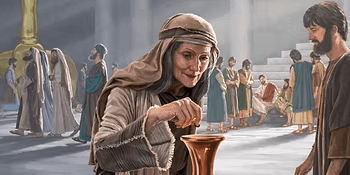
The large donations of the rich would trumpet their gifts, but the widow’s two small coins were so insignificant they hardly made a sound.
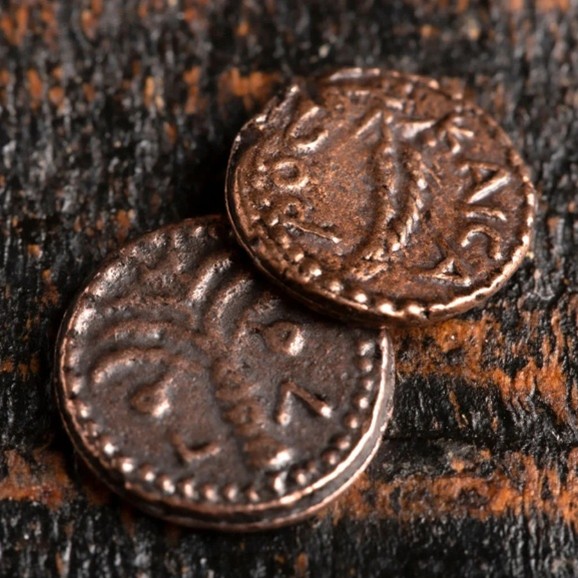

Many things have been said about this woman, and I am sure you have heard them all in sermons and Bible studies.
In short, Jesus discussed theology with her.

Susan Sutherland is the author of the Leaving Bethany Trilogy. To buy Leaving Bethany, Return to Caesarea and Advance from Antioch please go to the buy page.
If you like Susan’s blogs sign up for the mailing list and receive a free copy of The Aemilia Metella Interviews.
(1) Kate Bruce and Liz Shercliffe (2024) Out of the Shadows, Preaching the Women of the Bible Volume 2, SCM


Thanks for another thought-provoking blog Sue!
LikeLike
Wonderful questions. Thank you!
LikeLike