
The Journalist who tells women’s stories
Luke was a doctor and travelling companion of Paul. At the start of the gospel which bears his name, he says he carefully investigated everything before writing the account of Jesus’s life up to the resurrection. Luke is gathering information to write the sequel to his gospel, the Acts of the Apostles. His “what happened next.”
I have imagined him, talking to Aemilia Metella, my journalist who interviews women found in the New Testament. You can find her interviews in my blogs.
DOCTOR LUKE: Thank you for inviting me into your home, Aemilia. I’ve followed your interviews for a while now and look forward to reading each one.
AEMILIA: I’m pleased to talk with you, Doctor. I enjoy reading your book on the life of Jesus and I hear you are writing on a sequel.
DOCTOR LUKE: Yes, I’m a big traveller and like yourself enjoy interviewing people to hear their stories. I’m currently working on a sequel which will tell us what happened after Jesus’s resurrection. The stories are very exciting and will give everyone an insight into how the church has grown from those early years. I believe your family was one of the first to become believers in Jesus and was there at the beginning. Can you tell me about that?
AEMILIA: My family came from Cyrene in North Africa, and before I was born, my parents travelled to Jerusalem for Passover with my brothers, Rufus and Alexander. Unfamiliar with the city, they stumbled upon a crowd and Roman soldiers leading prisoners to their crucifixion. My father tried to avoid the scene, but a soldier forced him to carry Jesus’s cross when Jesus collapsed from exhaustion. At Golgotha, he witnessed the crucifixion. My mother later tried to wash the blood from his tunic, but the stains wouldn’t come out.
DOCTOR LUKE: That minor detail would have been a great addition to my first book, where I wrote about Simon, your father.
AEMILIA: My parents and brothers were still in Jerusalem for the Pentecost festival when they heard rumours that Jesus had risen from the dead. It sounded too far-fetched until they came across Jesus’s disciples and something strange happened.
DOCTOR LUKE: It’s something that we are accustomed to now, but it must have felt strange that first time.
AEMILIA: There was a sound of rushing wind, but nothing blew away, and then fire started falling from the sky. Peter, who was the leader of the group, told all the gawping bystanders that God’s Holy Spirit had just filled them. My mother and father joined the believers that day and took the message back to Cyrene. Will this be in your new book?
DOCTOR LUKE: Definitely! It’s the start of the church and will appear right at the beginning. Without the power and wisdom of the Holy Spirit, we wouldn’t be able to achieve anything.
AEMILIA: Yes, and we can experience the joy of God’s presence with us every day.
DOCTOR LUKE: Your family moved from Cyrene to Rome several years ago. Is that right?
AEMILIA: We moved when I was a child. I don’t remember Cyrene very much and view Rome as my home.
DOCTOR LUKE: When did you start writing?
AEMILIA: My mother always says she knows where I am from the scratching of my pen. Since I learned to read and write as a child, I’ve been interested in the power of the written word. I’m a little nosy too and like to talk to people and ask lots of questions. My father says it’s impertinent, but I call it inquisitive.
DOCTOR LUKE: In that case, I’m impertinent too. It’s a useful tool for a writer to have. I wouldn’t get far in writing my books without being both impertinent and inquisitive.
AEMILIA: I started asking questions of my friends and members of my church and writing their life stories. People seemed to enjoy reading them and then I was asked to go to Judea and interview some women you and others have written about, to get their angle on what happened when they met Jesus.
DOCTOR LUKE: Who did you see?
AEMILIA: My first trip to Judea was to interview three women who met with Jesus. Their stories are quite different, but what they have in common is a love for Jesus and a gratitude for what he did for them.
DOCTOR LUKE: What’s the standout detail from their stories?
AEMILIA: Miriam’s son Simon Peter was a disciple of Jesus, who often stayed at their home in Capernaum by Lake Galilee. When Miriam fell seriously ill, Jesus ran from the synagogue and healed her. She later introduced me to a neighbour, Naomi, who had lived in isolation for twelve years but bravely approached Jesus, believing that one touch of his cloak would heal her—and it did. On my way back through Samaria, I met Photine, a Samaritan woman Jesus met by a well and many still seen as an outsider, yet Jesus engaged her in a profound theological conversation.
DOCTOR LUKE: I hear you’ve interviewed women from all over the Roman world.
AEMILIA: I spent time with Lydia of Philippi, a lady you met while you travelled with Paul.
DOCTOR LUKE: That’s right. We stayed at her home after meeting with her in the town. There was a riot after Paul healed a fortune-telling enslaved girl. Paul has a habit of causing trouble wherever we go.
AEMILIA: So I’ve heard! Did you ever meet Abigail, the enslaved girl?
DOCTOR LUKE: No, we left in a hurry, as often happens when travelling with Paul.
AEMILIA: Lydia bought her from her owners who were glad to sell her after her fortune-telling days were over. She gave her a new name, a new home, and a new life. After Philippi, I sailed to Cenchreae to interview Phoebe, a leader of the church there.
DOCTOR LUKE: I’ve never met her, but Paul speaks highly of her.
AEMILIA: She delivered Paul’s letter, which he sent to the churches in Rome. She’s an excellent orator and teacher.
DOCTOR LUKE: Who did you visit on your second trip to Judea?
AEMILIA: I went there to interview Mary Magdalene. You must have met her.
DOCTOR LUKE: Of course. I interviewed her for my first book. She’s so interesting, and I’m pleased you could write more about her, as I had little room in my book.
AEMILIA: In Jerusalem I interviewed Mary of Bethany, sister of Martha and Lazarus. It was such a privilege to speak with her and it remains one of my favourite interviews. She spoke with such devotion her life with Jesus and the evening that she anointed Jesus’s feet in gratitude for returning her brother to her. These women talk with such honesty, and like yourself, I think future generations need to read these stories of Jesus and his early followers. Once written, it can be read forever, and I pray it will make a difference in people’s lives.
DOCTOR LUKE: As his physician, I was allowed to stay with Paul while he was under house arrest in Rome. Unfortunately, I had to leave and was pleased when your family took over his care. I knew I was leaving him in safe hands, and he speaks warmly about your mother.
AEMILIA: Paul can be blunt and sometimes misunderstood, but he appreciated all help. My mother cared for him like family—cooking, cleaning, and fussing over him—so much so that he began calling her “mother,” a joke that became real. We all grew to love him. I often served as his scribe, helping to write and revise his letters. One day, he asked what I wanted to do for Jesus. I shared my dream of writing women’s stories, and he encouraged me, even suggesting I speak with Phoebe and Lydia.
DOCTOR LUKE: You could say that Paul is your mentor.
AEMILIA: Yes, you can say that, because I don’t think I’d have had the courage to do so without his encouragement.
DOCTOR LUKE: What’s your next assignment?
AEMILIA: I’m due to leave next week for Judea again.
DOCTOR LUKE: Can you tell me who you are interviewing next?
AEMILIA: Sorry doctor, that’s a closely guarded secret!
Like Aemilia’s other interviewees, I created a backstory for her. The Gospels mention Simon of Cyrene as the man forced to carry Jesus’s cross; Mark notes his sons were Rufus and Alexander, likely known to the Early Church. In Romans 16:13, Paul greets “Rufus… and his mother, who has been a mother to me,” possibly linking Aemilia’s family to this Rufus. Whether or not it’s the same person, and Rufus was a common enough name, the connection fit well for Aemilia’s story.
A longer version of this interview appears in the Interviews of Aemilia Metella eBook—sign up for my mailing list to receive a free copy.
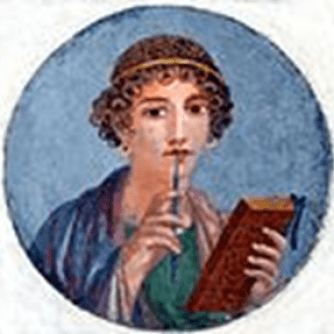
Naples National Archaeological Museum, CC BY-SA 2.0 <https://creativecommons.org/licenses/by-sa/2.0>, via Wikimedia Commons
aatik-tasneem-7omHUGhhmZ0-unsplash
“There was a sound of rushing wind, but nothing blew away, and then fire started falling from the sky.”
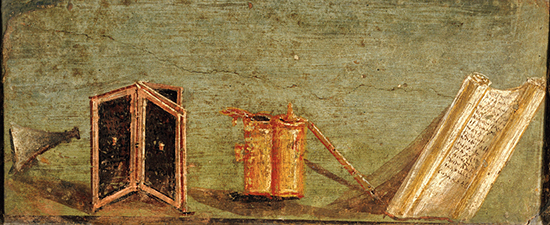
University of Chicago
“Since I learned to read and write as a child, I’ve been interested in the power of the written word.”
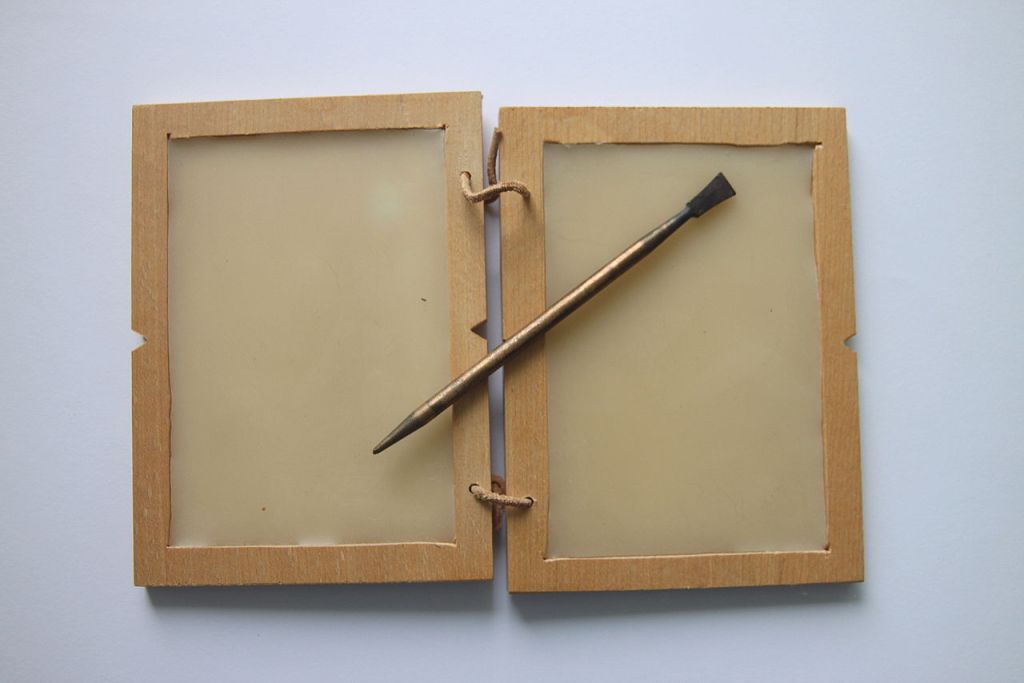
Image form Wikipdia
“These women talk with such honesty, and like yourself, I think future generations need to read these stories of Jesus and his early followers. Once written, it can be read forever, and I pray it will make a difference in people’s lives.”

Susan Sutherland is the author of the Leaving Bethany Trilogy. To buy Leaving Bethany, Return to Caesarea and Advance from Antioch please go to the buy page.
If you like Susan’s blogs sign up for the mailing list and receive a free copy of The Aemilia Metella Interviews.
 Leaving Bethany
Oh, I love how you have interviewed Aemilia and linked so many of your characters together.
LikeLike
Yes, I see all the characters working together, as they are in the Gospels and Acts. We often tell their stories and think of them separately but they worked together side by side to spread the gospel. They are all very interesting and I now have this bunch of characters in my head! I would love to meet with them and be invited to dinner!
LikeLike